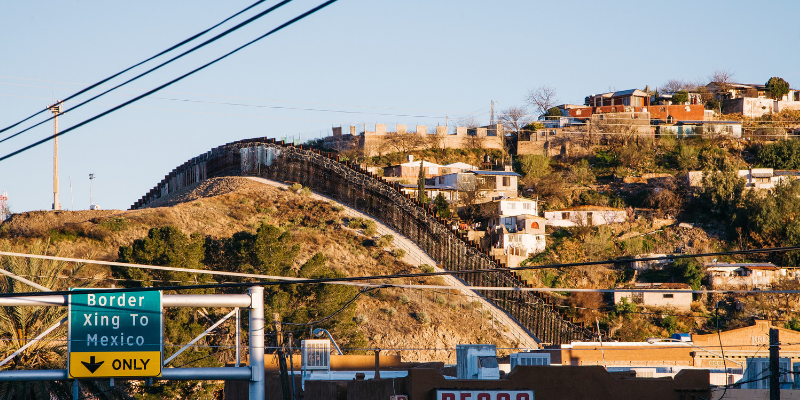
Mexican Migrant/Refugee Children and Youth in the Mexico-United States Borderlands
Forced migration is an urgent issue in Mexico which has the 3rd highest internally displaced population in Latin America. Yet displaced Mexican children and youth are largely invisible in contemporary media, academic, civil society, and political discourse and policy. They are assumed to be economic migrants despite evidence that many are displaced or forced to migrate due to multiple, often intersecting factors, including different forms of violence. Our interdisciplinary team of binational researchers from The University of Texas at Austin (UT), The University of Texas at El Paso (UTEP), and El Colegio de Sonora (Colson) in Mexico will examine in-depth, the magnitude, patterns, networks, processes, and experiences of displaced Mexican children, and the interrelationships between their internal and international migration in two study regions: the Sonora/Arizona border (Phase I funded by ConTex) and the Chihuahua/Texas border (Phase II funding requested from NSF).
Framework
To map the connections between the multiscalar processes of displacement in Mexico, and the intimate embodied experiences of invisibilized Mexican migrant and refugee children as they move through binational border migration, carceral, and legal spaces, we employ four interrelated and mutually reinforcing theoretical and epistemological perspectives: Feminist Geopolitics; Feminist Geolegalities; Children's Geographies; and Public/Engaged/Activist Scholarship.
Methodology
We take a mixed-methods approach integrating child-centered methods including participatory workshops and oral histories with youth; GIS and story mapping; key informant interviews; participant observation in Mexican shelters; and U.S. immigration courtroom ethnographies.
Intellectual Merits
Our findings will make strong intellectual contributions to the fields of migration/refugee studies and children/youth studies, across the disciplines of geography, law, social work, and public policy, among others. Our work contributes to more nuanced conceptualizations of displacement, beyond strict binaries between forced and voluntary migration, to consider the complex myriad of factors driving child migration in Mexico. We also address the gap in understanding of the interrelationships among displacement, internal migration, and international migration, which are rarely studied together. Through the development of feminist geographic ethnography of immigration hearings this research advances courtroom ethnography by attending to the affective, intimate, and bodily politics of courtroom subjects, spaces, and moments, and linkages with broader structural processes of legal, socio-cultural, political, and economic life. Additionally, through participatory approaches we develop child-centered methodological tools specific to migrant/refugee populations that will facilitate integration of youth perspectives into wider migration studies.
Broader Implications
This project addresses the urgent need for theoretically grounded child/youth centered empirical research to inform policy and improve protection, advocacy and service delivery to Mexican migrant/refugee children in both Mexico and the U.S. This project builds a binational interdisciplinary working group of scholars and advocates focused on displaced Mexican Migrant/Refugee children and youth. Academic publications and presentations, policy briefs, public dissemination events, shelter training materials, and a web site will call attention to and foment dialogue on the plight of displaced Mexican children in domestic and binational policy, advocacy, academic, and public arenas. Study findings will support government and NGO shelters housing displaced Mexican children. The project will provide training, mentorship, and professional development to a postdoctoral researcher and to undergraduate and graduate students in both Mexico and the U.S. Clinical interdisciplinary seminars on displacement, and internal and international child/youth migration will be offered at all three universities. Finally, displaced Mexican youth are increasingly exploited by cartels to smuggle migrants and drugs. Therefore, the project has important security implications for both the U.S. and Mexico, and attendant efforts to mitigate activities of organized crime and better manage undocumented migration into the U.S. It offers critical insights for both U.S. immigration policy reform as well as Mexico's policy response to internal displacement.